Does GHK Cu Really Work? A Dermatologist’s Perspective
GHK Cu (Glycyl L Histidyl L Lysine Copper) has become one of the most talked about peptides in aesthetic medicine. It is promoted for improving skin quality, reducing wrinkles, accelerating wound healing, and even stimulating hair growth. But how much of this is supported by science?
As dermatologists, it is important to separate promising research from proven clinical evidence.
What Is GHK Cu?
GHK Cu is a naturally occurring copper binding tripeptide found in human plasma, saliva, and urine. Its levels naturally decline with age. Laboratory studies have shown that it plays a role in tissue repair, collagen production, wound healing, and modulation of inflammation.
What Does the Evidence Show?
Skin Rejuvenation
This is where GHK Cu has the strongest evidence.
Laboratory studies consistently demonstrate that GHK Cu stimulates fibroblasts, increases collagen and elastin production, and supports skin repair. Several small human studies using topical formulations have reported improvements in skin firmness, elasticity, fine lines, and overall skin appearance. However, these studies are generally small, and large randomized clinical trials are still lacking.
Wound Healing
Research suggests that GHK Cu may accelerate wound healing by promoting collagen remodeling, reducing inflammation, and supporting the formation of new blood vessels. These findings are encouraging, particularly in laboratory and animal studies, with some early human data supporting its role in skin repair.
Hair Growth
Hair restoration is one of the most popular claims surrounding GHK Cu.
Experimental studies suggest that GHK Cu may stimulate hair follicles and prolong the hair growth phase. However, high quality clinical trials in humans remain limited. At present, there is insufficient evidence to recommend GHK Cu as a standalone treatment for androgenetic alopecia or other common forms of hair loss.
What About Injectable GHK Cu?
This is an important distinction.
Most of the available human evidence relates to topical GHK Cu used in skincare products. In contrast, there is very little high quality research evaluating injectable GHK Cu in humans. Claims regarding systemic anti ageing, muscle recovery, or whole body regeneration are currently not supported by robust clinical trials.
Is GHK Cu Safe?
Topical GHK Cu has been used in cosmetic products for many years and appears to have a good safety profile. Reported side effects are generally mild and include temporary redness, irritation, or itching in a small number of users.
The safety profile of injectable GHK Cu is much less certain because long term human safety studies are limited.
Is It Worth Using?
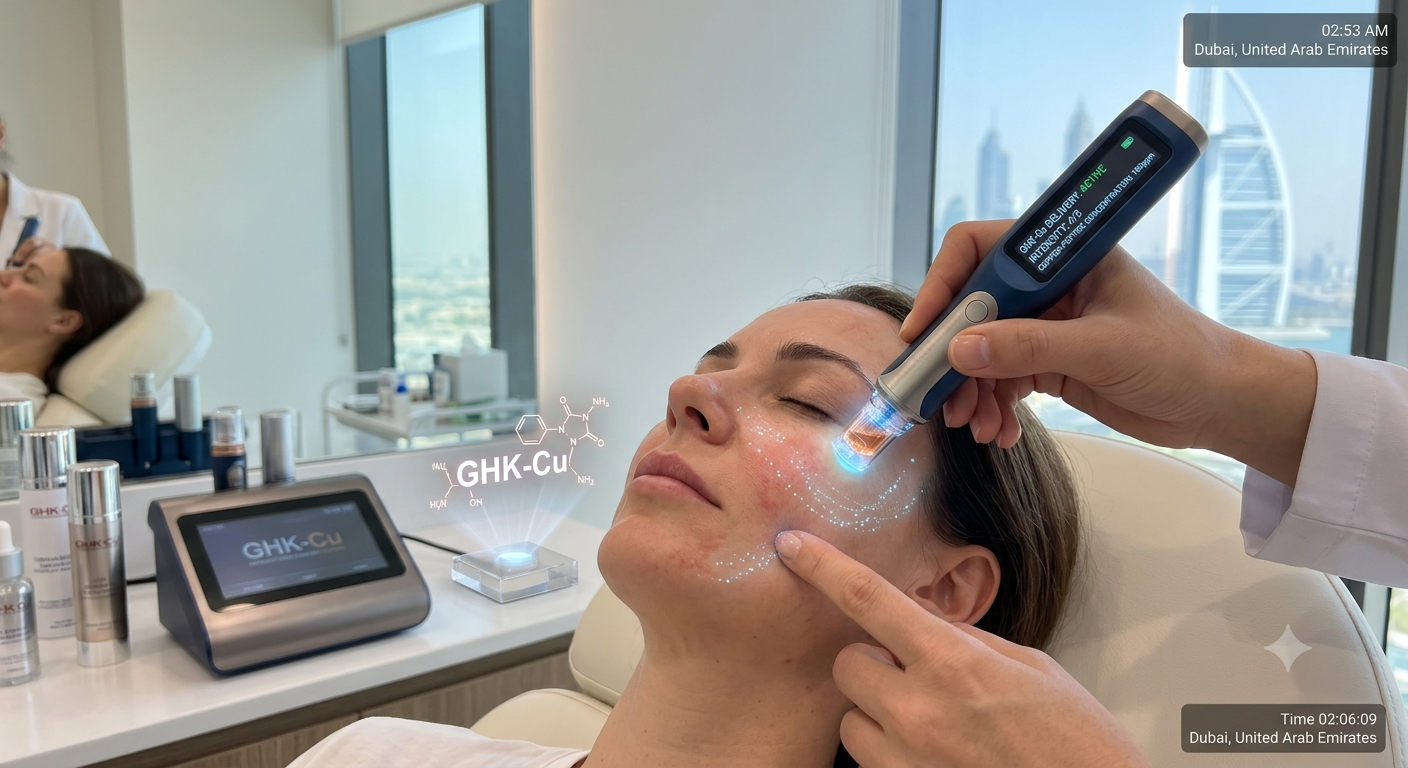
GHK Cu is an interesting peptide with promising biological effects and encouraging early research. It appears to be useful as a topical or subcutaneous injections for improving skin quality and supporting wound healing.
However, it should not be viewed as a miracle treatment. Current evidence is not strong enough to replace established, evidence based therapies for skin ageing or hair loss, and injectable use remains largely investigational.
The Bottom Line
GHK Cu is backed by strong laboratory science and promising early clinical research, particularly for skin rejuvenation and wound healing. However, robust human clinical trials are still limited, especially for injectable formulations.
If you are considering GHK Cu, discuss it with our dermatologists who can advise whether it may complement your treatment plan and, more importantly, recommend therapies with proven long term safety and effectiveness.
At The Dermis, we believe in combining innovation with evidence based medicine. Our recommendations are guided by scientific research, clinical experience, and treatments that have demonstrated real benefit for patients.