Is Dubai Water Really Causing Your Hair Loss? A Dermatologist Explains
One of the most common questions dermatologists hear in Dubai is:
“My hair started falling as soon as I moved to Dubai. Is it because of the water?”
The short answer is: Probably not, but the answer is more complex than you might think.
Why do so many people notice hair loss after moving to Dubai?
Hair loss after relocating is very common, but it is usually caused by a combination of factors rather than the water alone.
1. Stress of Relocation
Moving to a new country brings physical and emotional stress. Changes in work, lifestyle, sleep, and environment can trigger temporary hair shedding, known as telogen effluvium, which often appears two to three months after the stressful event.
2. Climate Changes
Dubai’s hot climate, strong sun exposure, and frequent use of air conditioning can leave both the scalp and hair feeling dry. While this may make hair appear more fragile or brittle, it does not usually damage the hair follicles that produce new hair.
3. Lifestyle Changes
Many people experience changes in their diet, exercise routine, sleep patterns, and daily habits after moving. Nutritional deficiencies, weight changes, or irregular meals can all contribute to increased hair shedding.
4. Water: Is It Really the Problem?
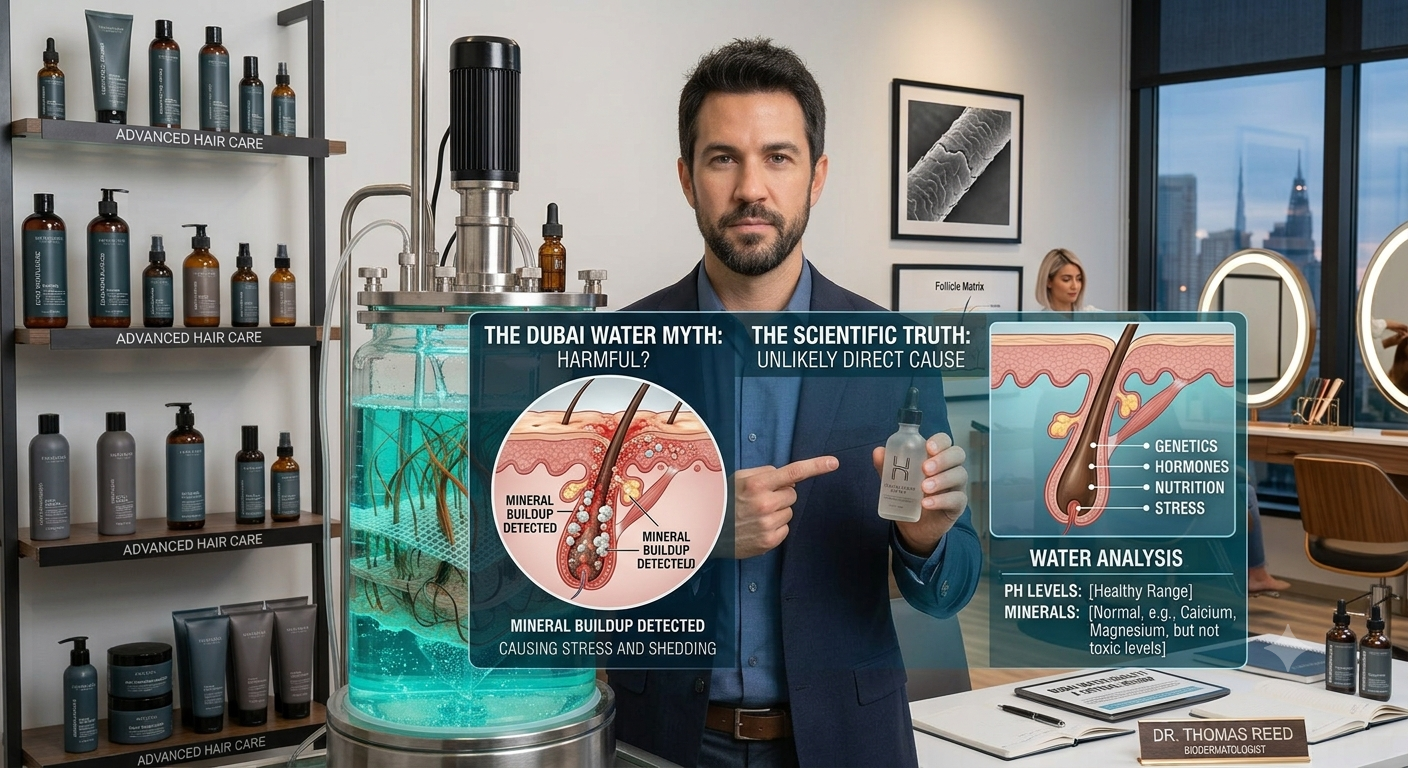
Dubai’s tap water is desalinated and contains minerals that make it relatively hard compared with water in some other countries. Hard water can leave mineral deposits on the hair, making it feel rough, dry, or difficult to manage.
However, there is currently no strong scientific evidence that hard water directly causes hair loss in healthy individuals. It may contribute to hair breakage or worsen dryness, but it is unlikely to be the main cause of excessive shedding.
5. The Real Causes We Often Find
During dermatology consultations, the most common causes of hair loss are:
- Androgenetic (genetic) hair loss
- Iron deficiency
- Vitamin D deficiency
- Thyroid disorders
- Hormonal imbalances
- Telogen effluvium
- Scalp conditions such as dandruff or inflammation
Many people blame the water, but investigations often reveal one or more of these treatable conditions.
What Can You Do?
If you notice increased hair fall:
- Eat a balanced diet rich in protein.
- Avoid excessive heat styling and harsh chemical treatments.
- Use a shampoo suitable for your scalp.
- Protect your hair from excessive sun exposure.
- If hard water leaves your hair feeling dry, consider using a chelating or clarifying shampoo occasionally and follow with a good conditioner.
- Seek professional assessment if shedding continues for more than two to three months.
When Should You See a Dermatologist?
Book a consultation if you notice:
- Hair shedding lasting more than three months
- Visible thinning of the scalp
- Widening of the hair part
- Bald patches
- Persistent scalp itching, redness, or scaling
Early diagnosis often makes treatment more effective.
The Bottom Line
Dubai water is frequently blamed for hair loss, but in most cases, it is not the main culprit. Hair loss is usually the result of multiple factors, including stress, genetics, nutrition, hormones, and underlying medical conditions.
Rather than guessing the cause, a proper dermatological assessment can identify what’s really happening and help you choose the most effective treatment.
At The Dermis, our licensed dermatologists provide expert online hair and scalp consultations to help you understand the cause of your hair loss and create a personalized treatment plan—wherever you are.